Noe Valley Unwarranted In-Law Units: Legalization Rules
September 3, 2026
September 3, 2026
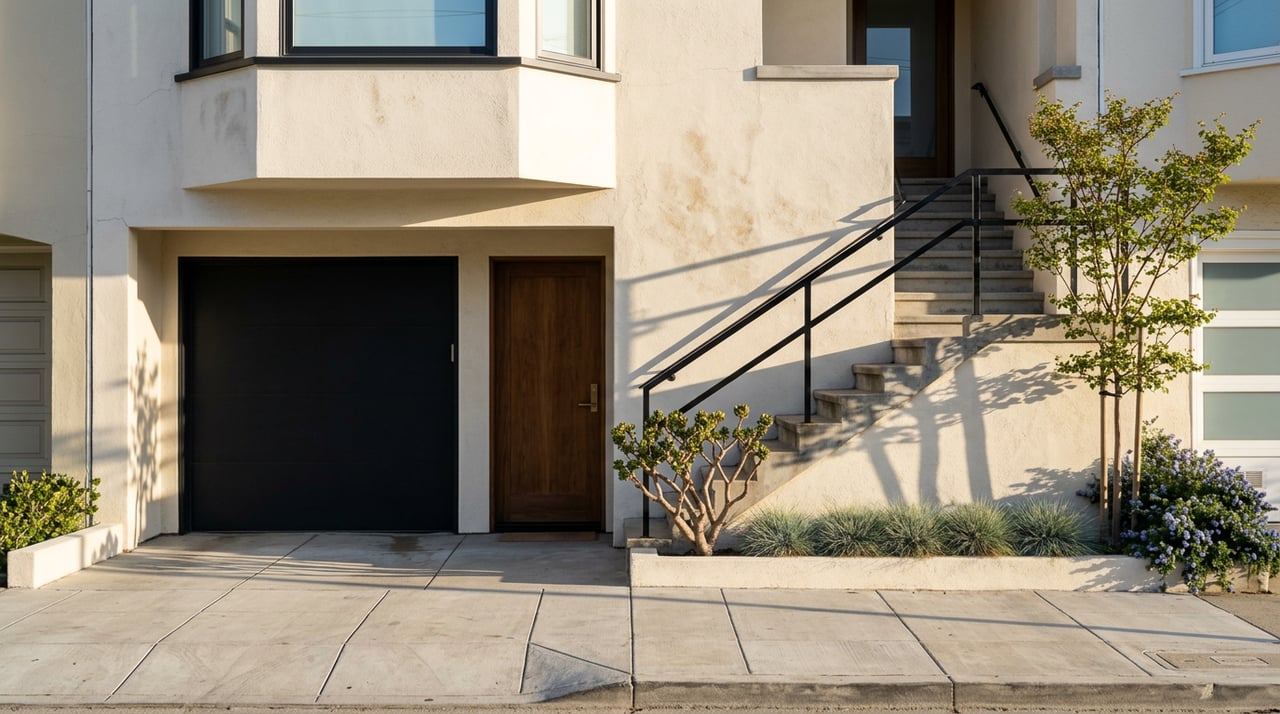
Walk through a listing for almost any Edwardian on a sloped Noe Valley lot and you will eventually hit the phrase that stops a lot of buyers cold: unwarranted in-law unit. It shows up constantly in this neighborhood's agent notes, tucked into descriptions of homes on Day Street, Elizabeth Street, and the blocks around 30th and Church, because so many of these houses were built into hillsides with a garage level that someone, at some point, quietly turned into a bedroom, a kitchenette, and a bathroom without ever pulling a permit.
For years the standard advice on that phrase was simple: disclose it, discount for it, and expect a buyer's lender or inspector to treat it as a liability rather than square footage. That advice is now half right. A California law that took effect January 1, 2025 rewrote the legalization process for units exactly like this. What it did not touch is a San Francisco Rent Board position that catches almost every owner off guard once the unit is legal. If you are selling, buying, or holding a Noe Valley property with one of these units, the sequence matters more than the headline.
Assembly Bill 2533, authored by Assemblymember Juan Carrillo and signed by Governor Newsom in September 2024, extended California's ADU amnesty program from units built before January 1, 2018 to units built before January 1, 2020. That two-year extension covers a meaningful slice of Noe Valley's garage conversions, many of which date to the 2010s building boom rather than the earlier eras that older amnesty rules targeted.
The more significant part of the law is what it took away from cities. Before AB 2533, San Francisco's Department of Building Inspection could apply current building code standards to a legalization application, which in practice meant a homeowner might be asked to bring a decades-old garage conversion up to the same standard as new construction. AB 2533 narrows that discretion. The city can only deny a legalization permit if the unit is genuinely substandard under California Health and Safety Code Section 17920.3, meaning it has a serious health or safety defect such as inadequate sanitation or structural failure. Missing smoke detectors, an undersized window, or outdated electrical work are the kind of items an inspector will flag and require you to fix, not grounds to reject the application outright. The law also blocks cities from charging impact fees or connection charges on these units, and it lets an owner hire a licensed contractor for a confidential inspection before filing anything with the city, so you learn what needs correcting before the clock starts.
San Francisco runs this alongside its own long-standing Dwelling Unit Legalization Program, a separate and older path administered by DBI and the Planning Department for units built before January 1, 2013. The two programs are not interchangeable, and knowing which one applies to a given Noe Valley property changes both the cost and the timeline.
| SF Dwelling Unit Legalization Program | AB 2533 State Amnesty | |
|---|---|---|
| Eligible construction date | Before January 1, 2013 | Before January 1, 2020 |
| Standard applied | Life safety requirements under SF Building Code | Health and Safety Code 17920.3 substandard-building threshold |
| Impact fees | Possible, case by case | Prohibited for qualifying units |
| Pre-application inspection | Informal DBI screening, non-binding | Confidential third-party inspection option |
| Can the unit later be sold separately | No, ineligible for subdivision | Depends on program used for construction |
| Eviction lookback | Owner move-in eviction within 5 years, or other no-fault eviction within 10 years, disqualifies the application | Not addressed in the state statute itself, so confirm with DBI which program's rules govern your application |
For a garage-level unit built into a Noe Valley Edwardian sometime in the 2000s or 2010s, AB 2533 is usually the faster and cheaper route. For an older unit that has been there since the building's original construction or an early remodel, the local program may be the only path, and it comes with more DBI discretion over what gets fixed.
Here is the part that surprises almost every owner who gets this far. San Francisco's Rent Board has held that unwarranted dwelling units are subject to the city's Rent Ordinance regardless of when the building was constructed, because no Certificate of Occupancy was ever issued for the unit. The Rent Ordinance normally exempts buildings built after 1979, but that exemption depends on the unit having a valid Certificate of Occupancy in the first place. An unwarranted unit never had one, so the Rent Board treats it as if the exemption never applied.
That means legalizing the unit does not make it a blank slate. Once you go through AB 2533 or the local program and pull a Certificate of Final Completion, the tenant you place in that unit generally gets the same just-cause eviction protections and rent increase limits that apply to a rent-controlled apartment anywhere else in the city. For an owner who plans to live in the main house and rent the legalized unit, that is a real constraint on future flexibility, not a footnote.
For an owner-occupant who wants to use the unit as guest space, a home office, or housing for a family member rather than a paying tenant, the rent control question mostly does not apply, because you are not renting it to anyone. That distinction is why the same unwarranted unit can be a straightforward win for one buyer and a much more complicated decision for another, depending entirely on what they intend to do with it after closing.
STRUCTURE Magazine describes San Francisco's Mandatory Soft Story Program as applying only to wood-frame buildings with five or more units and two or more stories over a soft story, built before 1978. Most single-family Noe Valley homes with a garage-level in-law unit do not meet that unit count and are not subject to the mandatory program, so this particular cost may not apply. It does not mean the retrofit question disappears entirely. A licensed engineer's assessment during the pre-application inspection will tell you whether a voluntary upgrade is worth doing anyway, and that answer varies by lot and by how the original garage excavation was framed.
Beyond retrofit costs, the broader Noe Valley market gives some sense of why getting legalization right before listing matters. Homes here routinely go to contract in under two weeks once they are priced and presented correctly. In a market moving that fast, a buyer's inspector who flags an unwarranted unit mid-escrow can cost you the timeline advantage that a well-documented, pre-legalized unit would have preserved.
If I legalize the unit but only use it for guests or family, does rent control still apply? No. The Rent Ordinance protections attach to a tenancy, not to the unit itself. If you are not renting it out, the rent control question is moot.
Can I sell the legalized unit separately from the main house? Under San Francisco's local Dwelling Unit Legalization Program, no. Legalized units are ineligible for subdivision and stay attached to the primary property. AB 2533's rules depend on which underlying ADU program the unit was built through.
What if the in-law unit was built after 2020? It falls outside AB 2533's amnesty window and outside the local program's 2013 cutoff. You would be working through San Francisco's standard ADU permitting process rather than either amnesty pathway, which is a different conversation with different costs.
An unwarranted unit is not automatically a problem or automatically a windfall. It is a set of dates, a rent control question, and a cost estimate that only makes sense once you know which one applies to the specific house. If you are weighing whether to legalize before you list, or trying to figure out what a Noe Valley property with one of these units is actually worth to you as a buyer, KJ Kohlmyer can walk the file with you and get you a straight answer before you are mid-escrow finding out the hard way. Get a home valuation or see current listings to start the conversation.
This article is general information, not legal, tax or financial advice. Consult a qualified professional about your situation.
October 15, 2026
October 8, 2026
October 1, 2026
September 24, 2026
September 17, 2026
September 10, 2026
I am a full-service real estate professional who has been buying, selling, and developing property in San Francisco for over 15 years.