Selling a Hillside Home in Glen Park: The Retaining Wall Question Buyers Ask First
August 20, 2026
August 20, 2026
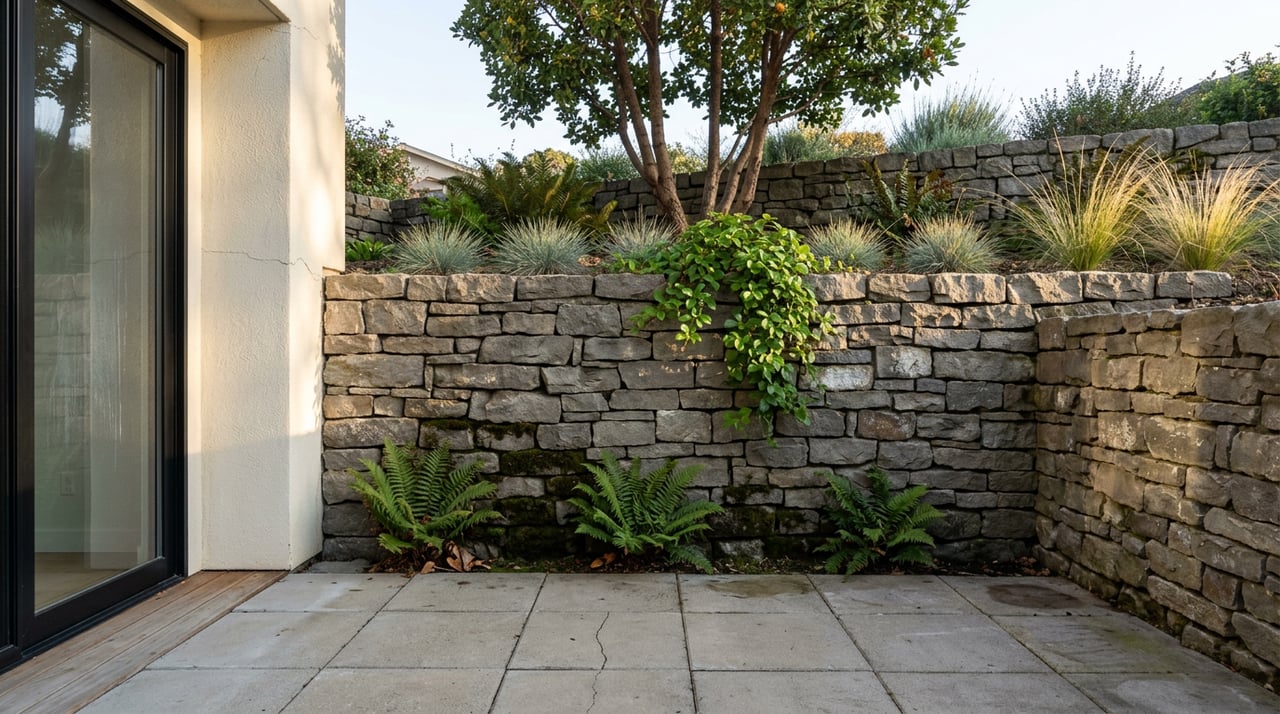
As the Glen Park Association recounts, in the 1930s, when Market Street was torn up and repaved with trolley tracks, some of the old paving stones were taken to nearby hillsides and used to build rock walls. Those walls are still holding up backyards across Fairmount Heights and the Billy Goat Hill area today.
The disclosure issue appears in a much smaller place: a two-line question on page four of the San Francisco Seller Disclosure Statement, asking whether the seller knows of any problems with retaining walls, whether leaning, bulging, or cracking. In a neighborhood built into the slopes of Fairmount Hill, Gold Mine Hill, and Martha Hill, that question is not a formality. It is often the first thing a buyer's inspector goes looking for, and it is the detail most likely to slow down an otherwise fast Glen Park sale.
Glen Park's terrain is not incidental to its real estate. The neighborhood sits at the southeastern edge of San Francisco's central hills, and its streets follow the hill's contours rather than a grid. That geography means a meaningful share of Glen Park lots include some form of retaining structure, whether a poured concrete wall holding back a driveway cut or a hand-stacked stone wall like those described above.
The disclosure form does not care how old the wall is or who built it. It asks a direct yes or no question, and a seller who answers carelessly, or who has genuinely never looked closely at a wall that has been part of the yard since before they owned the house, is setting up a conversation that will happen anyway, just later and with more leverage on the buyer's side.
Tama Landscaping's guide to San Francisco retaining-wall permits outlines the following thresholds:
| Wall height | What's required |
|---|---|
| Under 3 feet | Generally no permit, as long as the wall isn't supporting a driveway, building, or other surcharge load |
| 3 to 6 feet | A standard building permit with engineered drawings |
| Over 6 feet | Geotechnical review |
On top of those height thresholds, San Francisco's Slope and Seismic Hazard Zone Protection Act applies to any lot with an average slope steeper than 4 horizontal to 1 vertical, or that falls within certain mapped hazard areas, and requires sign-off from both a licensed geologist and a licensed geotechnical engineer for grading, shoring, underpinning, or retaining wall work. A fair amount of Fairmount Hill and Gold Mine Hill terrain can meet that 4-to-1 threshold, which means the same backyard wall that looks like a simple landscaping feature can carry a geotechnical requirement most sellers have never encountered.
For anyone who inherited a wall rather than built one, that is the gap that matters.
None of this friction is showing up in a slow market where sellers have time to sort it out before listing. Glen Park closed 2025 with 72 home sales, up from 70 in 2024, and a median price of $2,071,000, up 14.3 percent year over year, according to the Glen Park Association's year-end recap. That pace has only picked up. By June 2026, the Association's monthly market update described a spring where inventory was so low and demand so strong that homes were selling close to 30 percent over asking on average.
"Full steam ahead!"
That is how the Glen Park Association's own recap characterized the market in June 2026, noting that with inventory this tight, there was little reason for sellers to hold off listing a single-family home until fall. A market moving that fast rewards sellers who are ready. It punishes the ones who aren't, because a buyer's inspector who flags a retaining wall problem in a multiple-offer situation does not wait politely. According to Bay Area retaining wall contractors, a hillside project that requires a geotechnical report can take three to five weeks for permit approval after the soils report is completed, a timeline that collides directly with a 30-day escrow built for a market moving at full speed.
There is a structural reason so many of Glen Park's retaining walls have gone decades without a permit review, and it traces back to Proposition 13. An analysis of Glen Park parcel records published in May 2026 found that more than 1,197 residential parcels in the neighborhood have been held by the same owner for more than ten years, and 736 of those for more than two decades.
Put simply, the same conditions that create Glen Park's chronic inventory shortage also create its disclosure risk. A house that hasn't changed hands in twenty years hasn't had its retaining wall looked at by a geotechnical engineer in twenty years either, and the seller may not even know there is anything to look at.
Sellers assembling a disclosure package this year are dealing with more than the wall question. The Glen Park Association's April recap describes a new California requirement, effective May 15, 2026, that caps showerheads and faucets at 1.8 gallons per minute and toilets at 1.28 gallons per flush, and requires any water leaks to be repaired before a property changes hands. The San Francisco Association of Realtors pushed to delay the effective date because of how little advance notice sellers received. Whether or not that pushback changed the timeline, the requirement sits inside the same disclosure conversation as the retaining wall question, which means a seller's punch list this year runs from decades-old hillside stonework to how many gallons per minute the guest bathroom faucet uses.
For a Glen Park seller working through a disclosure package, the practical checklist looks like this:
None of this is about talking a buyer out of a Glen Park hillside home. It is about making sure the strongest part of this market, the speed, doesn't get undone by the one document nobody read closely enough.
If you're weighing whether to sell a hillside property in Glen Park, or you want a second opinion on what your disclosure package should say before it goes out, KJ Kohlmyer has spent two decades working through exactly this kind of entitlement and disclosure detail on San Francisco hillside properties. Get a home valuation or take a look at current listings to see what a well-prepared Glen Park sale looks like from the inside.
This article is general information, not legal, tax or financial advice. Consult a qualified professional about your situation.
October 15, 2026
October 8, 2026
October 1, 2026
September 24, 2026
September 17, 2026
September 10, 2026
I am a full-service real estate professional who has been buying, selling, and developing property in San Francisco for over 15 years.