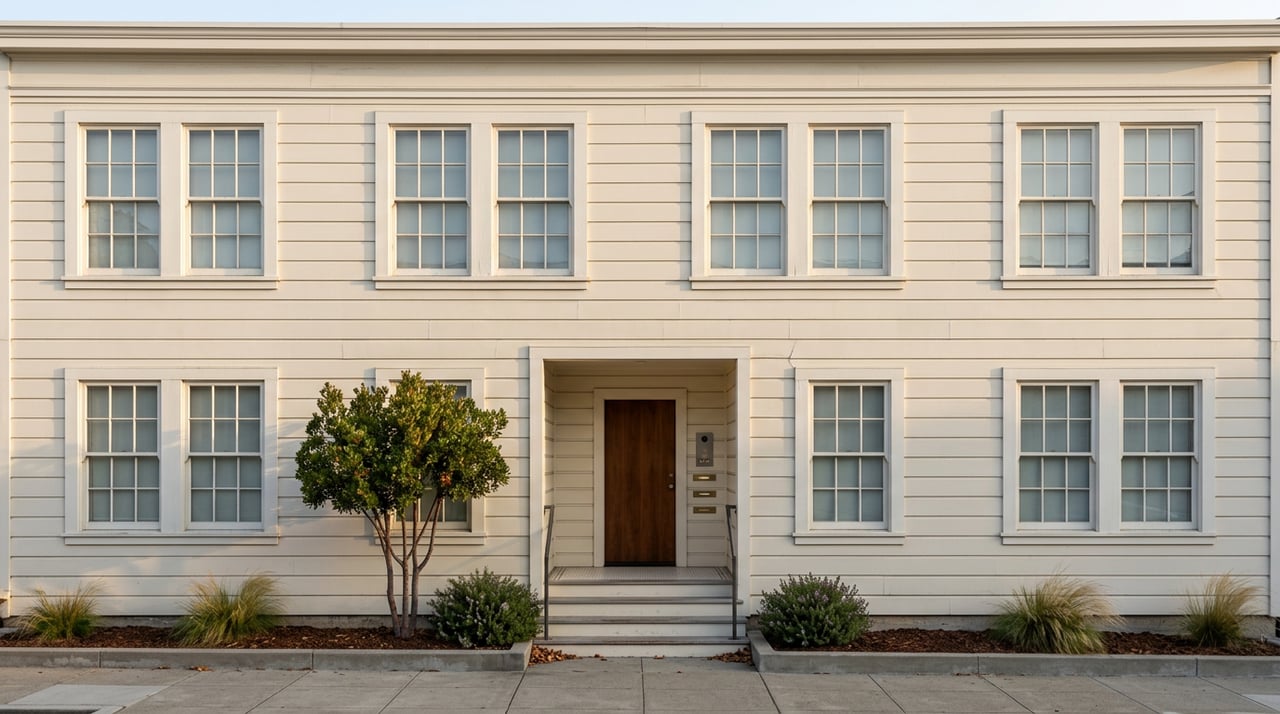
Selling a Multifamily Building in the Mission? Start With COPA
August 27, 2026
August 27, 2026
"It's a little overwhelming for small nonprofits. We're a team of three."
That's Jose Garcia, a program manager at the Mission Economic Development Agency, describing what it's like to receive up to fifty notices in a single month from owners who are required by law to tell his organization before they tell anyone else that their building is for sale. If you own a three-unit-plus apartment building in the Mission District and you're thinking about listing it, that notice requirement is yours to send, and it's not optional, and it comes before your broker can put a sign in the window or upload a listing anywhere.
Most sellers find this out the way most people find out about San Francisco's stranger ordinances: from their agent, mid-conversation, after they'd already mentally scheduled a listing date. The Community Opportunity to Purchase Act, known as COPA, gives qualified nonprofit organizations a first look at multifamily buildings before the open market ever sees them. It's been law citywide since 2019. What's changed by 2026 isn't the statute. It's the health of the organization most likely to receive that notice if your building sits in the Mission.
COPA applies to any residential building in San Francisco with three or more rental units, and to vacant land zoned to allow three or more units by right, meaning no variance or conditional use approval required. A triplex counts. A four-unit Edwardian on Shotwell counts. A vacant Mission lot zoned for a triplex counts, which matters if you're an investor sitting on an entitled parcel rather than a finished building.
Before a seller can list that property or solicit any offer, including quietly shopping it to a developer contact, the seller has to notify every organization on the city's Qualified Nonprofit list. From there, the clock runs in stages:
| Step | Who Acts | Time Allowed |
|---|---|---|
| Seller sends Notice of Sale to each Qualified Nonprofit | Before listing or soliciting any offer | No listing until this happens |
| Nonprofit notifies seller of interest in considering a purchase | Nonprofit | 5 calendar days |
| Seller discloses tenant names, contact info, and current rents | Seller | Upon a nonprofit's declared interest |
| Nonprofit submits an actual purchase offer | Nonprofit | 25 calendar days |
| Seller accepts or rejects the offer | Seller | At seller's discretion |
| If seller later accepts a third-party offer, any nonprofit that made an earlier offer can match those exact terms | Nonprofit | 5 calendar days after seller shares the third-party terms |
| Seller files a signed declaration to MOHCD affirming compliance | Seller | Within 15 days of closing |
If no nonprofit responds in that first five-day window, a seller is free to move forward with a broker and the open market. But the obligation doesn't fully disappear. Any nonprofit that engaged early keeps a right to match a later third-party offer on the same terms, which means the notice you send in week one can still resurface in week eight if you're not tracking who said what.
Run the math and a Mission building that draws real nonprofit interest is looking at a minimum thirty-day pre-market runway before it's shopped broadly, and that's the fast version. If a nonprofit makes an offer you reject, then accept a private buyer's terms months later, that nonprofit still gets its five days to step in and take the deal instead. Sellers who plan their listing date the way they would for a single-family home are almost always wrong about how soon that "For Sale" sign can actually go up.
Two carve-outs matter for how the Mission's housing stock actually trades. The city's own guidance confirms that a sale of one owner's tenancy-in-common interest, regardless of what percentage of the building that interest represents, is not treated as a COPA-triggering building sale as long as it isn't part of a coordinated sale of the whole property. A lot of small multifamily buildings in the Mission are held in TIC structures precisely because that ownership form moves differently through city processes than a fee-simple sale.
The vacant lot rule cuts the other way for anyone eyeing a development parcel. If the lot is zoned to permit three or more units by right, COPA applies to its sale even before a shovel goes in the ground. If getting to three units would require a variance or conditional use authorization, it doesn't. For an investor evaluating a Mission teardown or an underbuilt corner lot, that zoning distinction decides whether the property has to clear a nonprofit notice period before it can even be marketed to other developers.
The city's Qualified Nonprofit list includes several organizations, but MEDA is the one built specifically around the Mission. Since COPA took effect, MEDA has closed on seven multi-unit properties in the neighborhood, including an eight-unit building it's converting into ten, a deal that ran $6.2 million with $3.7 million of that covered by the city's Small Sites subsidy program. That's the mechanism working as designed: a nonprofit buys, the city subsidizes the gap, existing tenants stay housed at controlled rents, and the building comes off the speculative market permanently.
It's also, per Garcia's own account, a three-person team fielding dozens of notices a month, which means not every COPA notice gets a serious look, and the ones that do can take real time to underwrite before an offer materializes.
Here's the part that changes how a 2026 Mission seller should think about that thirty-day clock. In November 2025, the Board of Supervisors approved a $37.8 million refinancing of fifteen Small Sites properties owned by MEDA, covering 89 residential units and nine commercial spaces, including a building at 642 Guerrero Street. City officials at the hearing that preceded the vote said the portfolio's original financial assumptions hadn't held up, that the buildings carried more deferred maintenance than expected, and that the Budget and Legislative Analyst's Office warned the city might need to step in again in another ten years. The first round of layoffs, eliminating the Asset Management team and part of the Housing Development team, began that same month.
By May 2026, Mission Local reported that MEDA was cutting staff and slashing salaries further, even as public funding kept flowing to the organization. The same reporting noted that some tenants in MEDA's portfolio are still covered by rent control while new tenants move in at below-market rates pegged to income, a structure that preserves affordability but leaves little room to absorb repair costs or insurance spikes. None of this stopped MEDA from breaking ground on La Maravilla, a joint project with Mission Housing, in April 2026. The organization is still building. It's building while managing a financially fragile existing portfolio, and that combination is exactly the kind of institutional strain that slows down how quickly a new COPA notice gets a real answer.
The statute gives you a thirty-day rhythm on paper. The practical rhythm depends on whether the organization reading your notice has the staff and balance sheet to move on it, and right now, in the Mission specifically, that's a live question rather than a formality. A seller who assumes "no nonprofit responds in five days, I list on day six" is planning around the law as written. A seller who assumes "a nonprofit expresses interest, so I should expect a fast, clean close" is planning around an institution that just told the city its own building repairs weren't affordable at current rents.
There's a second layer underneath this. Rent-controlled Mission buildings are valued on the gap between what tenants currently pay and what the unit would command on turnover, and elevated interest rates through 2024 and into 2026 have compressed how much cash flow that gap can support during a hold period. That's true whether your eventual buyer is a nonprofit using Small Sites subsidy or a private investor underwriting at today's cost of capital. Either way, the timeline and the price both hinge on the same math: how much of the rent gap is realistically capturable, and how patient the capital behind the offer can afford to be.
The practical move is to build slack into your timeline from the start, keep your notice and disclosure paperwork clean enough that a rejected nonprofit offer doesn't come back to haunt a later private sale, and price the deal with the current rate environment in mind rather than the assumptions that made sense a few years ago.
Does COPA apply to my duplex? No. The threshold is three or more residential units, or land zoned to permit three or more units by right. A duplex and most single-family properties fall outside it.
What happens if a nonprofit never responds to my notice? If no Qualified Nonprofit notifies you of interest within the initial five-day window, you're free to list and market the property. Keep documentation of when and how you sent the notice, since your Seller Declaration to MOHCD after closing has to affirm compliance under penalty of perjury.
Can I sell my TIC share without triggering all of this? Generally yes, if the sale of your individual interest isn't part of a coordinated sale of the entire building. Confirm the specifics with a transaction attorney before you assume an exemption applies, since the line depends on how the deal is structured.
Selling a multi-unit building in the Mission was never just a pricing exercise, and in 2026 it isn't just a compliance checklist either. It's a question of who's actually positioned to act on the first-look window the city gives them, and what that means for how you sequence your own sale.
KJ Kohlmyer has spent more than two decades working Mission District transactions from both sides of the table, buyers, sellers, and the developers who buy entitled parcels in between. If you're weighing a sale of a small apartment building or a development-zoned lot in the Mission, reach out for a valuation that accounts for COPA timing, current cap rate conditions, and what your building is actually worth once the rent gap and the regulatory sequence are both on the table.
October 1, 2026
September 24, 2026
September 17, 2026
September 10, 2026
September 3, 2026
August 27, 2026
I am a full-service real estate professional who has been buying, selling, and developing property in San Francisco for over 15 years.