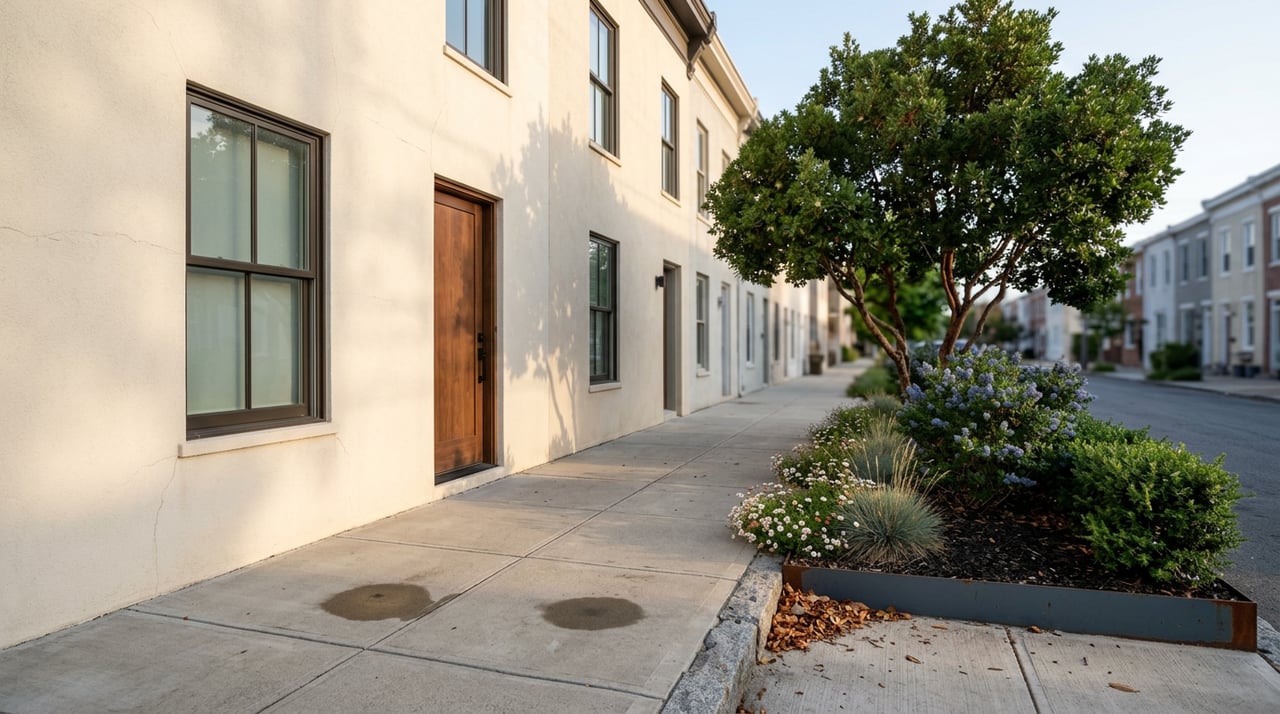
Slow Sanchez in Noe Valley: How Neighbors Set the Pace
September 17, 2026
September 17, 2026
Six days before I sat down to write this, Sanchez Street between 26th and Clipper closed to cars for a Sunday afternoon. No permit fight, no supervisor's ribbon cutting, just neighbors setting out folding tables, a plant swap table, and enough chalk to keep every kid on the block busy until dinner. It was the second time this year the street closed itself off like that, following a May block party that doubled as the 20th annual Friends of Noe Valley Garden Tour.
If you live near Sanchez, none of this surprises you. What might: San Francisco's own transportation agency has spent more than three years designing a capital upgrade for this exact stretch of street, and as of this year that project is still described on the city's own project page as being in its early stages. Meanwhile, the informal stuff neighbors built with no city funding, no engineering hearing, and no construction timeline, finished ahead of it.
That order of operations is the actual story here. Not that Sanchez is quiet and pleasant to walk down, you already know that. The story is that the reason it works has almost nothing to do with the infrastructure the city is still building.
San Francisco's Slow Streets Program sets two targets for every corridor in it: no more than 1,000 vehicles a day, and average speeds no higher than 15 mph. Sanchez doesn't just clear those bars, it clears them by a wide margin.
| Measure | Program Target | Sanchez Street |
|---|---|---|
| Vehicles per day | 1,000 or fewer | About 320 |
| Average speed | 15 mph or under | About 13 mph |
| Drivers over 30 mph | Minimized | Zero recorded |
When SFMTA evaluated all its Slow Streets against these criteria, Sanchez came back as the best-performing corridor in the program, well below target on every measure, with a formal recommendation of "continue to monitor." No structural changes required. That finding is years old at this point, but the agency's current project page still describes Sanchez as the highest performer in the system, which means whatever made it work in year one is still holding in year six.
Here's the part that doesn't square: if the street already met every safety and volume target the city cares about, why has SFMTA spent since 2023 designing a "Next Generation" upgrade for it, with concrete traffic islands, painted safety zones, and a reported budget north of $277,000? The honest answer, based on the agency's own public updates, is that the capital project isn't fixing a problem. It's trying to formalize something that residents had already solved on their own, with paint, planters, and a standing invitation to show up on Friday nights.
Walk Sanchez on a Friday around 7:30 p.m. and you'll find the Noe Run Club gathering outside Noe Cafe at 26th and Sanchez. Saturday morning at 10, a different group forms two blocks up at 24th and Sanchez for Noe Walks, a casual neighborhood walk that started, by the organizers' own account, as one person's regular loop that other neighbors started joining until it became a standing appointment. Neither group has a budget, a permit, or paid staff. Both meet on a schedule you could set a watch to.
Brooke Ray Demko, an urban planner who co-chairs Friends of Slow Sanchez and lives directly on the corridor, has described the effect in blunt terms: her kids draw with sidewalk chalk in front of the house and have run a lemonade stand down the block, the kind of low-stakes freedom that depends entirely on cars not being the dominant thing on the street. She's called the sense of neighborhood connection the strongest she's felt in nearly twenty years in San Francisco.
Andrew Casteel, who founded Laughing Monk Brewery and has been a fixture of the Slow Sanchez volunteer effort since it started, put the appeal of the street in more practical terms once: the walk connects a park on one end to ice cream on 24th Street on the other, turning two separate destinations into a single, walkable loop. Sarah Katzen, another resident, has described watching kids learn to ride bikes and meeting neighbors over impromptu coffee, connections she says wouldn't have happened without the street functioning the way it does. At Noe Cafe itself, staff have fielded enough questions from confused visitors that the pattern has become a small running joke: out-of-towners want to know why so many people are just standing around in the middle of the road.
None of that shows up in a traffic study. All of it shows up in why the traffic study keeps coming back clean.
While SFMTA's concrete-and-signage redesign has moved through hearings and design revisions since 2023, a much smaller, much cheaper resident initiative quietly lapped it. Friends of Slow Sanchez partnered with Friends of the Urban Forest to survey the corridor between 23rd and 30th streets and identified 167 potential sidewalk garden locations. The group raised over $22,000 to fund an initial build-out, recruited residents to sponsor individual plots in front of their own homes, and organized volunteer teams to help water and maintain them.
By June 28 of this year, phase one of that project was done: twelve gardens installed along the corridor, each one sponsored and maintained by the people who live next to it. One, at Sanchez and Jersey, is looked after by Hola Kids Preschool. The whole effort ran on a volunteer email list and a shared spreadsheet, not a city contract.
Compare that timeline to the capital project's own history. SFMTA's Next Generation Slow Sanchez proposal was approved for funding by the county transportation authority back in early 2023, with an original target of being open for use by March 2024. As of the agency's most recent public updates, the project was still moving through design refinement and public hearings, with construction not yet reported as complete. A neighborhood-run greenway with a five-figure budget outpaced a six-figure government infrastructure project.
None of this requires an invitation. The recurring fixtures on Sanchez are open to anyone who lives nearby:
The block-long mural that artist Amos Goldbaum painted directly onto the pavement between 24th and Elizabeth streets, an orange line drawing of Victorian rooflines and Sutro Tower done in the same reflective paint used on highway markings, has held up as a kind of unofficial landmark for the whole project. It was funded entirely by donations to Friends of Slow Sanchez, the same all-volunteer group behind the run club, the walks, and the greenway.
None of this is an argument that Sanchez doesn't need any city investment, streetlights and permanent traffic islands matter for safety over the long run. But if you live near this corridor, it's worth noticing what actually got the street to where it is. The behavior change came first, built by neighbors who showed up on a schedule for years before any concrete was poured. The engineering is still catching up to what a run club, a walking group, and a dozen sidewalk gardens already proved works.
That's not a small distinction if you're trying to understand what makes a place like Noe Valley function the way it does. The street didn't get slow because the city made it slow. It got slow because enough people decided to be there, consistently, long before anyone official signed off.
If you're curious how neighborhood-level details like this connect to what a home on or near Sanchez is actually worth, or you just want a straight read on the Noe Valley market from someone who pays attention to this level of detail, KJ Kohlmyer is a phone call away.
October 8, 2026
October 1, 2026
September 24, 2026
September 17, 2026
September 10, 2026
September 3, 2026
I am a full-service real estate professional who has been buying, selling, and developing property in San Francisco for over 15 years.