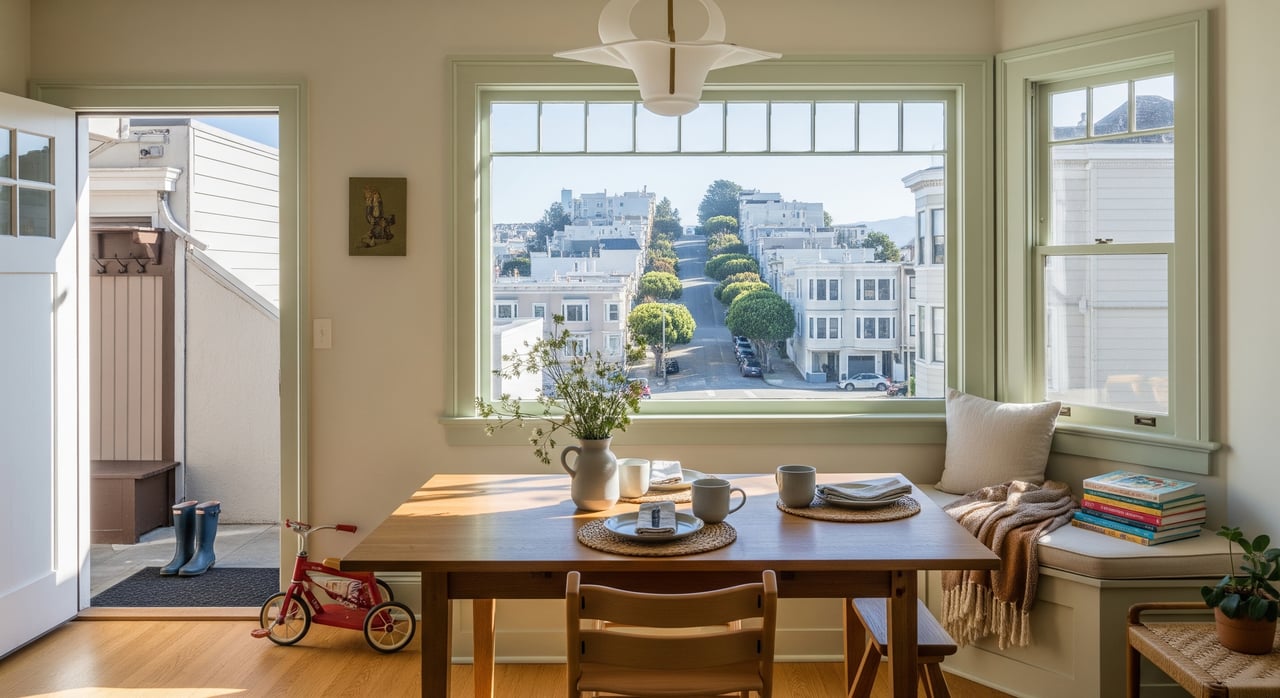
Noe Valley Family Life: What Everyday Days Feel Like
February 5, 2026
February 5, 2026
Thinking about raising a family in Noe Valley? You might be picturing quiet, tree‑lined streets, a sunny afternoon at the playground, and a quick coffee stop on 24th Street between school drop‑off and work. If that’s your rhythm, you’re in the right place. In this guide, you’ll get a clear picture of everyday family life here so you can decide if Noe Valley fits your routine and priorities. Let’s dive in.
Noe Valley is a predominantly residential neighborhood with classic Victorian and Edwardian homes, small apartment buildings, and some newer multi‑unit properties. The low‑rise scale and walkable streets give it a relaxed, neighborhood feel that many parents appreciate. You’ll find family‑sized layouts more often than in dense downtown areas, which can make daily life easier.
The commercial heart runs along 24th Street and Church Street. You can keep most errands close: grocery staples, a quick lunch, a toy or baby gear stop, and a coffee meet‑up after school. It’s a practical setup for days that bounce between work, school, and play.
Compared with foggier parts of the city, Noe Valley tends to be warmer and sunnier thanks to the surrounding hills that buffer coastal wind. That usually means more reliable park time and fewer chilly afternoons cut short. For families, those extra sunny hours can add up to easier stroller walks, after‑school playground time, and weekend gatherings outside almost year‑round.
The 24th Street and Church Street corridor covers most day‑to‑day needs. You’ll find:
Most families walk this loop, especially on weekends. It’s also where you’ll bump into classmates, caregivers, and neighbors, which helps build community fast.
You have several small playgrounds and pocket parks within Noe Valley for daily play. For bigger spaces, two standouts are nearby:
Sidewalks and schoolyards also contribute to daily outdoor time, depending on school and community policies. The bottom line: it’s easy to get kids outside without a long car ride.
Noe Valley is within the San Francisco Unified School District. Families typically look at proximity to neighborhood schools, program fit, and performance indicators. Assignment policies can include neighborhood priorities, sibling preference, and a citywide choice component, and they do change over time.
For the most current process, use the SFUSD enrollment and assignment pages. You can also review state indicators on the California School Dashboard to understand how schools are performing across multiple measures. Private and parochial options in nearby districts are also common alternatives, each with its own admissions timeline and tuition.
San Francisco offers a mix of center‑based daycare, family child care homes, nannies or au pairs, and cooperative preschools. Demand is high citywide, so it’s smart to start your search early and join waitlists ahead of your target start date. Costs for infant and toddler care are among the highest in the state, and they represent a major household budget item for many families.
If you’re exploring subsidies or programs, the San Francisco Department of Children, Youth & Their Families is a helpful starting point. You’ll find information about eligibility and city programs that support families across different income levels.
Public transit is straightforward for many local routines. The J Church Muni line runs along Church Street, creating a direct surface route through parts of the city. You can check current service details and schedules on the SFMTA J Church page. Several bus lines connect to nearby commercial streets and transit hubs, and BART stations in the Mission and Glen Park are a short Muni ride or drive from most Noe Valley addresses.
If you commute by car to the Peninsula or South Bay, you’ll usually access US‑101 or I‑280 via neighborhood streets. Travel times vary by route and traffic, but plan on roughly 20 to 40 minutes to downtown San Francisco and about 30 to 70 minutes or more to the Peninsula, including Redwood City, during peak hours. Many parents mix modes over the week, combining transit, carpooling, and flexible schedules.
Biking is a good option for neighborhood errands and school runs for many families. Some streets have bike lanes and others are shared. For the latest infrastructure and route maps, check the SFMTA city bike map. Stroller routes on the 24th and Church corridor are typically manageable, with the usual urban caveats around crosswalks and peak time foot traffic.
Noe Valley’s narrow residential streets and busier commercial blocks can get tight at school drop‑off and pick‑up times. Many families walk, use scooters or bikes, or coordinate carpools to ease congestion. If you rely on street parking, expect typical San Francisco realities: limited spaces, permits on some blocks, tow zones, and meters on commercial streets.
Weekdays in Noe Valley move at a working‑family pace, with school runs in the morning, quick errands on 24th, and parks filled in the late afternoon. Weekends are social, with cafés, kids’ activities, and time in nearby parks. Parent groups, school PTAs, and community organizations often anchor your circle, and it’s easy to meet other families through recurring routines.
Housing costs in Noe Valley tend to run higher than the city median, reflecting the neighborhood’s residential appeal, family‑sized homes, and location. Many buyers choose Noe Valley for its combination of space, walkability, and climate, understanding they’re paying a premium relative to some other neighborhoods. Childcare, private tuition, and daily services also reflect the broader cost profile of San Francisco.
If you’re weighing space versus budget, focus on floor plan function. A well‑laid‑out two or three bedroom with access to outdoor space or a nearby park can go further than a larger home that complicates your commute or disrupts your daily routine.
Families usually choose pediatricians and dentists close to home, with urgent care and major hospitals a short drive or transit ride away. You can find city health resources through the San Francisco Department of Public Health.
Noe Valley is often described as a residential, neighborhood‑oriented area, though conditions vary block by block and over time, like anywhere in the city. For current, official data, review the San Francisco Police Department’s crime data tools and compare specific locations you’re considering.
If you picture a day that starts with a sunny walk to school, includes a quick 24th Street errand loop, and ends with an hour at the playground, Noe Valley likely matches your routine. The neighborhood’s microclimate, housing stock, and walkable main streets make daily family life feel organized and connected. The tradeoffs are real, especially on cost and school logistics, but many families find the balance works.
If you’re ready to explore homes that fit your budget, commute, and lifestyle, connect with KJ Kohlmyer for local guidance and a clear plan.
October 15, 2026
October 8, 2026
October 1, 2026
September 24, 2026
September 17, 2026
September 10, 2026
I am a full-service real estate professional who has been buying, selling, and developing property in San Francisco for over 15 years.