Thinking about adding an ADU to your Bernal Heights property? You are not alone. California has streamlined approvals, and many San Francisco owners are exploring ADUs to create rental income, support multigenerational living, or boost resale value. This guide breaks down the key rules, the realities of building on a hillside, timelines, cost drivers, and a simple way to size up ROI so you can move forward with confidence. Let’s dive in.
Rules snapshot: California and San Francisco
California’s ADU laws require cities to approve most compliant ADUs through a ministerial process, which means no discretionary hearing if you meet objective standards. In practice, that can speed up approvals. San Francisco follows these state rules while applying local objective standards like setbacks, yard coverage, design controls, and rear-yard rules.
Two agencies will shape your path:
- San Francisco Planning Department, which checks zoning and land use.
- Department of Building Inspection, which reviews structural plans, egress, energy, and fire/life-safety. Fire and Public Works may weigh in on access, hydrants, or curb cuts when needed.
A few important takeaways:
- Ministerial approval is possible for many ADUs, but hillside conditions can add requirements such as slope stability studies or retaining wall design.
- Parking rules are limited under state law, and San Francisco often waives ADU parking when state criteria are met, especially near transit. Always confirm current guidance.
- Plan check can require geotechnical reports, roof drainage plans, grading permits, and engineered retaining walls on sloped lots.
How Bernal Heights lots shape your ADU
Bernal Heights is a mix of single-family and small multi-unit homes on terrain that ranges from flat terraces to steep slopes. Many homes have lower levels that open to the downhill side, partial basements, or garages at street grade.
Key site factors that affect ADU feasibility:
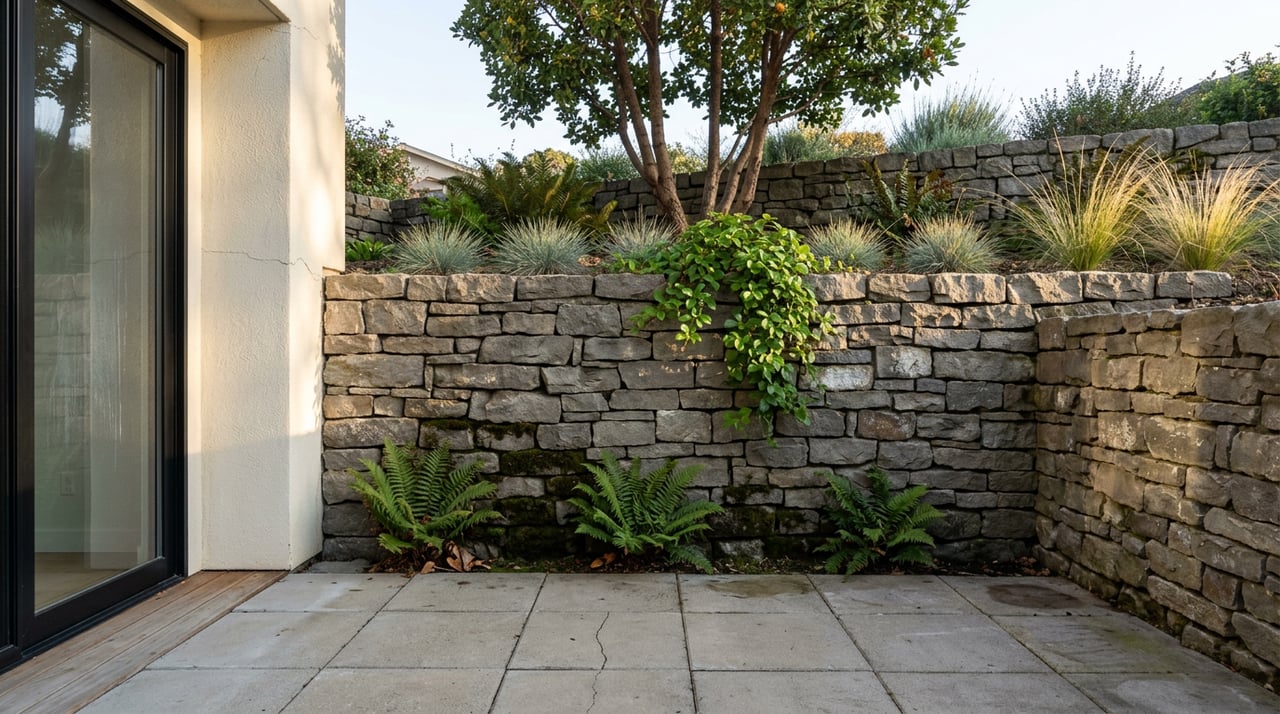
- Slopes and geotechnical stability, which may require a geotechnical report, special foundations, erosion control, and engineered retaining walls.
- Access and staging on narrow streets, which can complicate deliveries or require crane and hoisting.
- Rear-yard limits, which often leave little flat area for a detached cottage without grading.
- Utilities, where routing sewer, water, and storm connections to a detached unit can be straightforward or complex depending on the slope and distance.
- Historic or special district overlays, which can add design review or limit exterior alterations.
The practical bottom line: interior conversions are often the most straightforward path on hillside parcels, especially when a lower-level walk-out already exists.
Common ADU paths on hillside parcels
Interior conversion of a lower level
What it is: Converting a basement, lower-level walk-out, or unused accessory space into a self-contained unit with a kitchen, bath, and legal egress.
Why it works in Bernal: Many homes already have lower levels that face the slope, which reduces exterior work and grading.
What to expect: Building Code compliance for egress, light and ventilation, unit separation, and fire safety. If there are no exterior changes or grading, approvals can stay ministerial.
Timeline and cost drivers: Often faster to permit and build than new construction. Watch for older building surprises like wiring, plumbing, or seismic upgrades.
Garage conversion or ADU over a garage
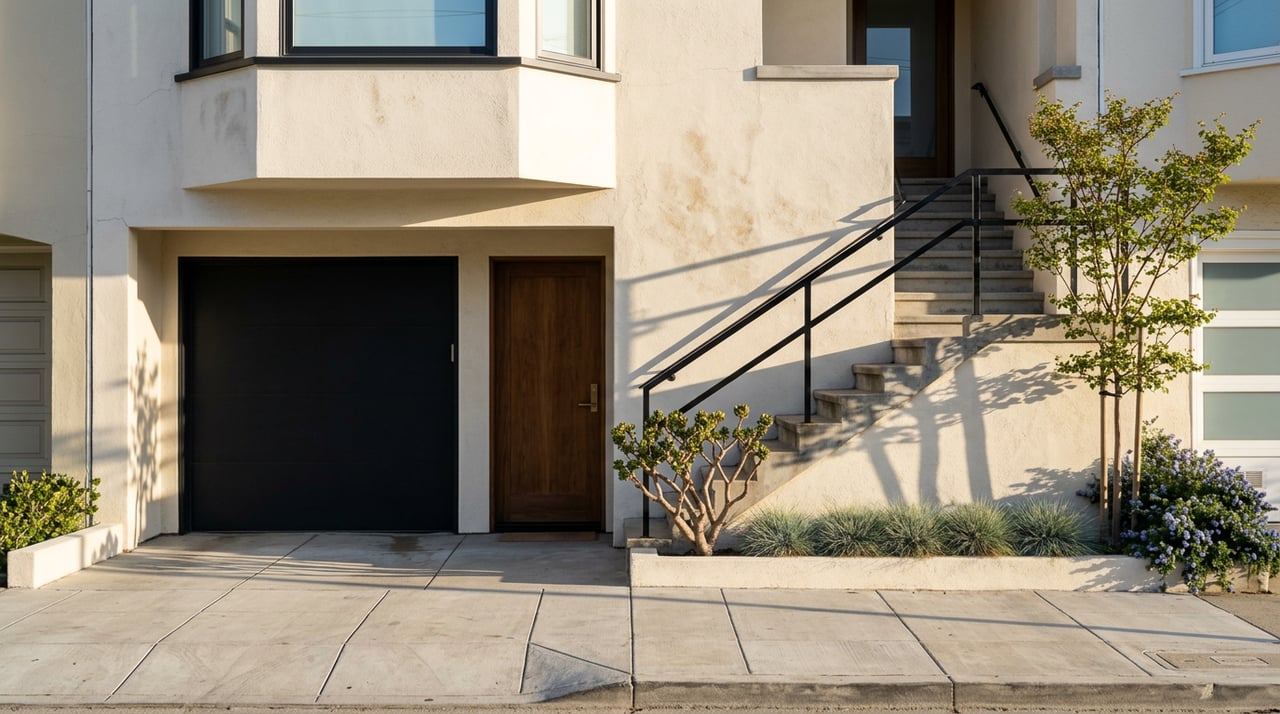
What it is: Converting an existing garage to an ADU or rebuilding the garage with a unit above.
Why consider it: It uses an existing footprint at street level and preserves outdoor space on a slope.
What to expect: Structural upgrades are common, along with slab, drainage, and potential parking considerations. State rules can limit required replacement parking.
Timeline and cost drivers: Moderate timelines. Structural work and drainage on slopes can add complexity and cost.
Detached backyard cottage
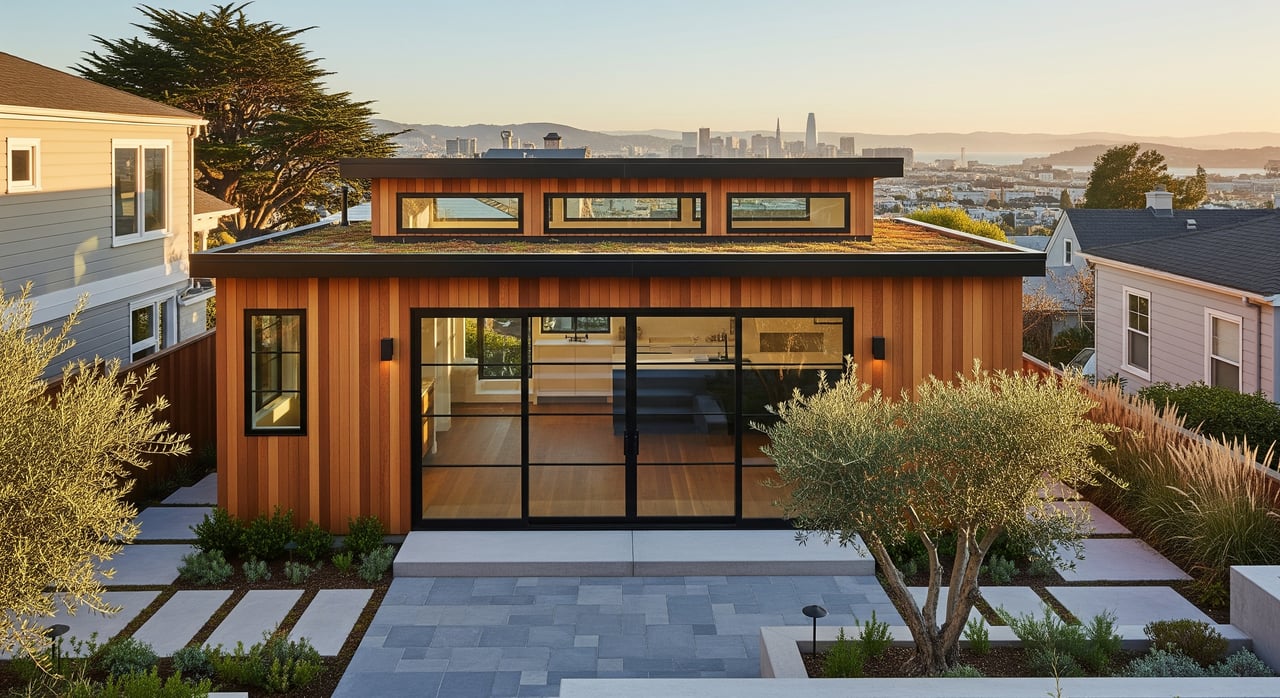
What it is: A new detached ADU on a rear terrace or yard.
Why consider it: Maximum privacy and independent access, good if you have a flat terrace.
What to expect on hillsides: Geotechnical analysis, grading, retaining walls, drainage plans, and possible design review if special hillside rules apply.
Timeline and cost drivers: Longer timelines and higher costs on slopes due to geotech, foundations, and site work.
Semi-subterranean or new lower-level ADU
What it is: Adding a new lower level beneath the home or creating a daylight level that opens to the downhill side.
Why consider it: On steep lots, it can produce a walk-out unit with minimal yard impact.
What to expect: Excavation triggers grading permits and engineering. The city will check massing, slope stability, drainage, and foundation impacts.
Timeline and cost drivers: Often similar to detached builds or higher, depending on shoring, underpinning, and complexity.
Junior ADU (JADU)
What it is: A smaller unit, typically up to 500 square feet, carved from the existing interior and sharing some facilities.
Why consider it: Lower cost and faster path with minimal exterior work.
What to expect: Rules differ from standard ADUs. JADUs typically cannot be sold separately, and local occupancy conditions can apply.
Feasibility checklist for Bernal Heights owners
Use this quick screening to decide your next step:
- Confirm zoning and which ADU types are allowed on your parcel.
- Check if you are in a Hillside Special District or historic overlay.
- Walk the site: Is there a usable lower level, garage footprint, or flat terrace?
- Identify utility access and the distance to tie-ins for sewer and water.
- Assess construction access, street width, and staging options.
- Review any easements, covenants, or HOA restrictions.
- Verify title and survey information so setbacks and grades are accurate.
If slope exceeds roughly 10 to 15 percent or you see signs of past movement or retaining walls, plan for early geotechnical input.
Timelines and cost drivers you should expect
Every site is different, but these ranges reflect common paths in San Francisco and the realities of hillside work:
- Permit to completion, typical:
- Simple interior conversion with no exterior changes: 3 to 6 months.
- Detached ADU on a flat and accessible parcel: 6 to 9 months.
- Hillside ADU requiring geotechnical reports, retaining walls, grading, or any added review: 9 to 18 months or longer.
- Construction durations:
- Interior conversion: 1 to 3 months, depending on scope.
- Detached new build or modular: 4 to 9 months.
- Complex hillside foundation or retaining walls: 6 to 12 months.
Major cost drivers on hillside parcels:
- Geotechnical investigation and reporting.
- Retaining walls, shoring, excavation, and special foundations.
- Structural upgrades or underpinning of the existing building.
- Access and staging, including crane or hoisting if needed.
- Utility rerouting and stormwater or drainage mitigation.
Planning ranges in the Bay Area context:
- Interior conversions and straightforward JADUs often land from the tens of thousands into the low six figures, depending on scope.
- Detached ADUs on standard flat lots are typically mid to high six figures, with wide variability.
- Hillside premium: expect 20 to 50 percent or more above comparable flat-lot builds when grading, retaining, and specialized foundations are required.
Always get two to three estimates from ADU-experienced local contractors and a concept-level review from an architect. Early geotechnical input can prevent redesigns and surprise costs.
Estimating rental ROI in Bernal Heights
You can build a simple model before you spend on design:
- Size your market rent. Use current local listings to estimate rent for a similar unit size and finish in Bernal Heights and nearby areas.
- Subtract operating costs. Include utilities you plan to cover, repairs, management fees, insurance, and any increase in property taxes from the improvement.
- Calculate payback. Add design, permitting, and construction costs, then divide by annual net rent to estimate years to break even before financing.
- Factor financing and opportunity cost. If you plan a construction loan, include interest during construction.
- Include non-monetary ROI. Multigenerational living, flexibility for a caregiver, or improved resale marketability can be meaningful, even if you choose not to rent.
Regulatory and tax notes to remember:
- ADUs typically increase assessed value, so property taxes often rise on the improved portion.
- Rental income is taxable as ordinary income. A CPA can advise on deductions and depreciation.
Where pros save time and reduce risk
Bringing the right team in early pays off, especially on a hillside:
- Architect or designer with San Francisco ADU experience, to align your program with objective standards and target ministerial review where possible.
- Geotechnical engineer, to determine soil conditions, foundation type, and retaining wall needs.
- Structural and civil engineers, to design foundations, retaining systems, and drainage that protect the slope and the building.
- Land surveyor, to confirm property lines, setbacks, and grade.
- Permit expeditor or ADU specialist, to navigate SF Planning and DBI submittal checklists and cut down plan-check cycles.
- Contractor with hillside ADU experience, to price access and staging correctly and avoid mid-project surprises.
- Attorney or title specialist, if any easements or covenants are unclear.
Common ways this team shortens your path:
- Early geotechnical screening avoids redesign late in the process.
- Pre-submittal check-ins can confirm whether your scope stays ministerial and what you will need for plan check.
- Standardized, construction-ready plan sets reduce resubmittals and save time.
- Accurate staging plans prevent last-minute crane or access cost escalations.
Practical next steps for Bernal Heights owners
- Step 0: Do a quick self-screen. Identify your lot type, slope, and potential ADU location using parcel information and aerials.
- Step 1: Confirm zoning and whether you are in a Hillside or historic overlay with San Francisco Planning.
- Step 2: If your slope is roughly 10 to 15 percent or more, schedule a geotechnical reconnaissance before committing to detailed design.
- Step 3: Get rough estimates from two to three local contractors and a concept plan from an architect to compare feasibility, timelines, and costs.
- Step 4: Explore financing and talk with a tax professional about assessed-value impacts and rental income treatment.
Ready to assess your lot, your ADU options, and the likely ROI in today’s market? Connect with a local advisor who understands Bernal Heights and hillside feasibility. If you want a tailored plan, reach out to KJ Kohlmyer for neighborhood-savvy representation and project-level guidance.
FAQs
How long does an ADU take in Bernal Heights?
- Simple interior conversions can run 3 to 6 months from permit to completion, while hillside projects with geotechnical work and retaining walls often take 9 to 18 months or more.
Do I need parking for an ADU in San Francisco?
- State law limits many local parking requirements, and San Francisco often waives parking for ADUs that meet state criteria, especially near transit, so confirm your parcel’s specifics with Planning.
What ADU type is easiest on a hillside lot?
- Interior conversions of existing lower levels are often the most straightforward because they minimize grading and exterior changes while focusing on egress and life-safety.
How much more does a hillside ADU cost than a flat-lot build?
- Expect a hillside premium of roughly 20 to 50 percent or more due to geotechnical work, retaining walls, special foundations, and access logistics.
Will building an ADU raise my property taxes?
- Adding an ADU usually increases the assessed value, so taxes often rise on the improved portion, and a tax professional can help you estimate the change.
Can I build both an ADU and a JADU on my property?
- State rules allow certain unit counts, but what you can build depends on your parcel’s zoning and site conditions, so verify with San Francisco Planning during early feasibility.