Bernal Heights View Homes Guide: What Impacts Value
June 25, 2026
June 25, 2026
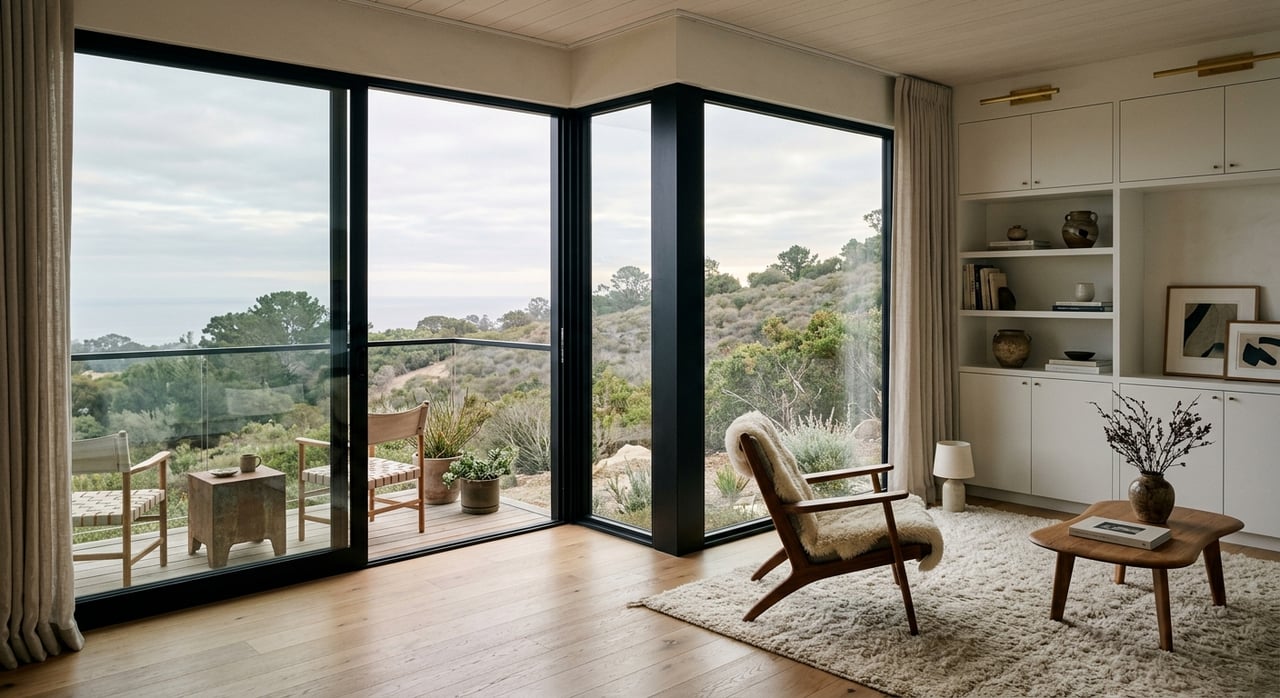
If you have ever wondered why two Bernal Heights homes with similar square footage can sell at very different prices, the answer is often simple: the view. In a hill neighborhood like Bernal Heights, sightlines can change from one block to the next, and that can have a real impact on value. If you are buying, selling, or simply trying to understand your home’s position in the market, it helps to know how views are actually weighed. Let’s dive in.
Bernal Heights is uniquely shaped by topography. Bernal Heights Park offers a 360-degree panorama with views of the San Francisco Bay, the Golden Gate Bridge, downtown, San Bruno Mountain, and the East Bay, which tells you a lot about how elevation works across the neighborhood.
Because the area is built around a hill, small changes in lot position, roofline, and slope exposure can create very different experiences from one home to the next. Blocks below the hill that face north are often the ones most likely to capture downtown-oriented vistas.
Views also matter here because Bernal Heights is largely a low-rise housing market. San Francisco Planning’s 2024 Housing Inventory lists 8,949 total housing units in Bernal Heights, including 4,722 single-family homes and 3,187 two-to-four-unit properties. In a neighborhood with this kind of housing pattern, height, placement, and orientation can influence value more than many buyers expect.
The market context matters too. Redfin reports a median sale price of $1.7 million over the last three months ending May 2026, with a median of 14 days on market. In a fast-moving, high-priced market, even a moderate view premium can translate into a meaningful dollar difference.
A view is not just a yes-or-no feature. The valuation research consistently shows that view value is site-specific, meaning the premium depends on the relationship between the home, the slope, the surrounding buildings, and the actual view corridor.
That is why neighboring homes can have very different pricing, even when they look similar on paper. One property may have a broad outlook from the main living area, while the next one has only a peek view from an upper bedroom.
The broader housing literature supports the idea that better views tend to sell for more, but it does not support a single universal percentage. Studies cited in the research report found an average 3.4 percent premium from visual accessibility in one single-family market, while other studies found street-level view premiums ranging from 4.9 percent to 9.29 percent, and neighborhood park views averaging 5.6 percent.
The key takeaway for Bernal Heights is straightforward: better views usually add value, but the size of that premium depends on quality, durability, and daily usability.
The highest-premium Bernal Heights homes are usually the ones with the broadest and most durable outlooks. Think unobstructed downtown skyline views, bay or Bay Bridge views, or wide panoramas from elevated lots near the hill.
These homes tend to stand out because the view is not incidental. It is often part of the home’s core appeal and visible from the spaces you use most.
Planning context supports this idea. San Francisco’s General Plan says major views, especially open-space and water views, should be protected, and it emphasizes maintaining hilltop open spaces and views along streets.
A partial view can still carry value, but it is usually priced less aggressively than a true panorama. In Bernal Heights, this often means a view from an upper floor, a deck, or a window framed by neighboring roofs or trees.
This is where layout matters a lot. If the same sightline is visible from the kitchen and living room, it may contribute more to value than if it appears only from a stair landing or secondary bedroom.
Research on window-view quality helps explain why. View content, access, and clarity are separate factors, so a partial view that is easy to enjoy every day may be more meaningful than a technically wider view that feels disconnected from the home’s main living spaces.
Homes with little or no usable view are not automatically less desirable. In Bernal Heights, they may still compete strongly based on condition, floor plan, natural light, outdoor space, parking, and overall presentation.
Still, in a neighborhood where the baseline price point is already high, the absence of a view can shape where a property lands within its competitive set. That difference may look modest as a percentage, but it can still be significant in actual sale price.
A view generally carries more weight when you can enjoy it from the primary living spaces. Buyers tend to respond more strongly when the outlook is part of daily life, not just a feature tucked into one corner of the house.
That is why a view from the living room, dining area, or kitchen often matters more than a similar view from a single bedroom. Access affects experience, and experience affects value.
A broad, open view usually commands more attention than a narrow or interrupted one. A skyline view framed by rooftops may still have appeal, but it often falls below a full panorama in pricing power.
The same principle applies to what you are actually seeing. Water, open space, and major city landmarks tend to be more influential than a limited sightline with heavy visual obstruction.
Not all views are equally secure. San Francisco’s planning guidance supports protection of major views, and Bernal Heights has East Slope guidelines that encourage development to step with the slope, break up massing, and preserve glimpses of views on either side of the ridge line.
That said, planning policy is not the same as a private guarantee. A buyer or seller should think about whether the view feels durable based on surrounding topography, nearby structures, and how much of the sightline depends on conditions that could change.
If you are considering a view property, it helps to move beyond the listing language and ask a few practical questions.
If the outlook is visible from the main living areas, it will usually matter more than if it appears only from a bedroom, stair landing, or roof deck. The more integrated the view is into everyday living, the more likely it is to support a stronger price.
Not every “view home” belongs in the same category. A peek at downtown from one window is different from a wide, open skyline or bay view from multiple rooms.
A view that relies on a narrow corridor between neighboring structures may be less secure than one created by elevation and topography. In Bernal Heights, the hill itself can create durable sightlines, but each property still needs to be evaluated on its own setting.
This is one of the biggest pricing mistakes in view-home analysis. A home on a north-facing slope with a strong downtown orientation should not automatically be compared with similar-sized homes elsewhere in the neighborhood if their view corridors and room orientation are different.
If you own a Bernal Heights home with a view, the value is not just in having one. It is in how the market experiences it.
A strong pricing strategy should account for the type of view, where it is enjoyed, and how it compares with nearby homes that may have very different outlooks. Two houses can share the same zip code, similar size, and similar finish level, yet still fall into different pricing tiers because of view quality.
Presentation matters too. If the view is one of your home’s best features, the marketing, photography, staging, and showing plan should make that obvious from the start.
Bernal Heights is exactly the kind of neighborhood where broad averages can miss the story. Because the housing stock is relatively low-rise and the topography changes quickly, the difference between a premium view home and a standard comparable can be highly specific to the block, the lot, and even the room layout.
That is why view valuation here works best as a local exercise, not a generic rule. The most useful framework is simple: panorama and permanence at the top, partial and layout-dependent views in the middle, and no-view homes priced mainly on fundamentals.
If you want a clearer read on where your Bernal Heights property fits, or what a specific view home is really worth before you bid or list, working with someone who understands the neighborhood at the block level can make a real difference. To talk through your property or your next move, connect with KJ Kohlmyer.
October 15, 2026
October 8, 2026
October 1, 2026
September 24, 2026
September 17, 2026
September 10, 2026
I am a full-service real estate professional who has been buying, selling, and developing property in San Francisco for over 15 years.