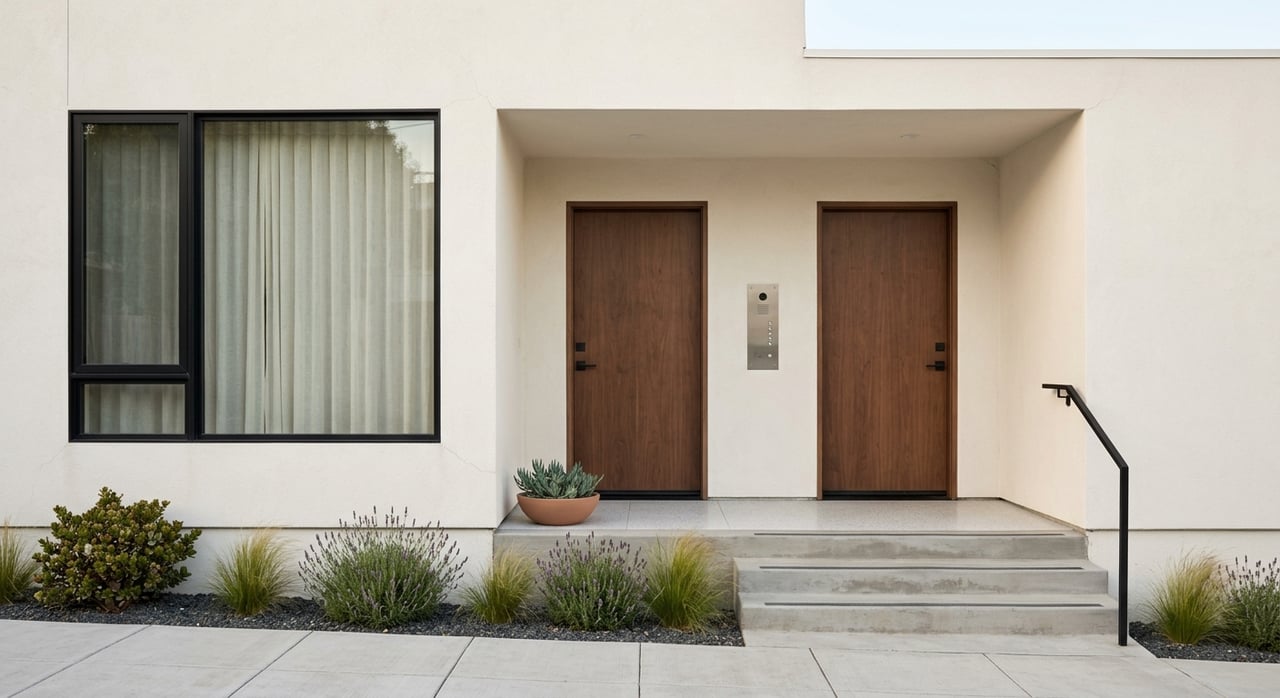
Glen Park Condo and TIC Guide for Smart Buyers
July 16, 2026
July 16, 2026
Wondering whether a Glen Park condo or TIC is the smarter way into the neighborhood? You are not alone. In a market where single-family homes often sit at a higher price point, attached housing can open more options, but the details matter more than many buyers expect. If you are comparing condos, TICs, and even smaller detached homes in Glen Park, this guide will help you understand pricing, ownership, financing, and the questions to ask before you commit. Let’s dive in.
Glen Park stands out for its compact, village-like feel and strong transit access. San Francisco Planning describes the neighborhood as pedestrian-scaled, close to green space, and centered around Glen Park BART. The city’s community plan also notes that more than half of riders at Glen Park BART arrive on foot, which helps explain why attached housing plays such an important role here.
For buyers, that means condos and TICs are not just a budget fallback. In Glen Park, they are a core part of the housing mix, especially near the village and transit. San Francisco Planning also notes that stacked apartments and condominiums in the downtown area tend to be less expensive than single-family housing, particularly in a neighborhood like Glen Park.
Glen Park remains a high-price market, even for attached homes. As of mid-2026, Zillow’s home value index placed the average Glen Park home value at $1.862 million, while Redfin reported a May 2026 median sale price of $1.938 million and a median of 15 days on market. Realtor.com also described Glen Park as a seller’s market in June 2026, with a median listing price of $2.195 million.
That context matters when you start comparing condos and TICs. A condo may offer a lower entry point than a detached house, but that does not always mean it will feel inexpensive. In Glen Park, attached housing spans a wide range of price points, sizes, and ownership structures.
Recent Glen Park condo examples show just how broad the range can be. A one-bedroom condo at 45 Wilder Street was listed at $749,000 with $382 per month in HOA dues. A larger two-bedroom unit at 53 Wilder Street was listed at $1.295 million with $777 per month in HOA dues.
That spread is important because it shows there is no single “typical” Glen Park condo. Some units may offer a more accessible starting point for buyers who want neighborhood access and walkability. Others, especially larger or boutique units, can start to edge closer to detached-home pricing.
Many buyers assume a TIC automatically costs less than a condo. In Glen Park, that is not always true. A recent TIC example at 2732 Diamond Street, a 1908 Edwardian two-unit property, had an estimated value of $1.361 million and included a shared fee covering water, garbage, exterior maintenance, homeowners insurance, and earthquake insurance.
The lesson is simple. A TIC is not a one-size-fits-all affordability play. Price depends on square footage, building condition, location, monthly costs, and how the ownership structure affects financing and resale.
It is also worth comparing attached homes to smaller detached options. In the Glen Park area, a single-family listing at 19 Congo Street was priced at $1.195 million with no HOA dues, while a recent sale at 257 Chenery Street closed at $1.75 million.
This does not mean a detached home will always be the better value. It does mean you should compare the full picture instead of assuming a condo or TIC is automatically the cheaper path. In Glen Park, the price gap between attached and detached housing can be narrower than expected.
A condominium gives you individual ownership of your unit plus a shared interest in the common areas. You would typically pay your own mortgage, property taxes, utilities, and HOA dues. Those dues help cover common-area expenses and building operations.
For condo buyers in California, the disclosure package is a major part of due diligence. State disclosure rules require materials like reserve account information, governing documents, budgets, board records, and statements about rental restrictions. Before you remove contingencies, it is worth reading the budget, reserve summary, meeting minutes, CC&Rs, and house rules carefully.
A tenancy in common, or TIC, is a different form of ownership. According to the California Department of Real Estate, a TIC is an undivided-interest arrangement where owners have exclusive occupancy rights assigned through a TIC agreement. That agreement should clearly explain occupancy rights, tax apportionment, and management rules.
This is one reason TICs require extra attention during review. You are not just evaluating the home itself. You are also evaluating the legal agreement that governs how the property is shared, managed, and financed.
TIC financing often works differently from condo financing. California DRE guidance notes that TIC loans may involve more conservative underwriting, higher interest rates or down payment requirements, appraisal sensitivity, and potential issues tied to blanket encumbrances.
For buyers, that can affect both monthly cost and loan flexibility. A TIC that looks attractive on list price alone may become less attractive once you factor in financing structure, cash needed to close, and resale considerations. This is one of the biggest reasons buyers should compare condos and TICs with the same level of financial detail.
Some buyers view a TIC as a temporary step toward future condo conversion. In San Francisco, that should be treated as a possibility, not a promise. San Francisco Planning says the condo conversion program applies to buildings with six residential units or fewer, and owners must have occupied at least 50 percent of the units for three continuous years before entering the city’s annual lottery.
That is a narrow path, not a guaranteed outcome. If future conversion is part of your decision, it is wise to treat it as uncertain unless the facts clearly support it.
When you tour a Glen Park condo, the monthly HOA number is only the start. You want to understand exactly what that fee covers and what costs could still come your way later.
Ask questions like these:
In Glen Park, listings often highlight parking, garage access, or storage. It is smart to confirm those details in writing rather than relying on marketing language alone.
With a TIC, your questions should go deeper into the structure of ownership. You are looking at both the home and the agreement that defines how the property functions.
Ask for and review:
These documents and answers are central to how a TIC works now and how it may perform when you want to refinance or sell later.
In Glen Park, the best choice usually comes down to tradeoffs, not labels. A condo may offer simpler ownership and financing, but it may also come with higher HOA dues. A TIC may give you more space or a more classic flat layout, but it can involve more complex underwriting and legal review.
A detached home may offer more privacy and no HOA, but it may need more maintenance or cost more upfront. Because Glen Park is compact and transit-oriented, buyers often balance price against parking, privacy, monthly carrying costs, and walk-to-BART convenience.
Glen Park is a small neighborhood, but the housing stock is highly varied. You can find boutique condos near the village core, older TIC flats in smaller buildings, and detached homes just blocks away. On paper, two properties may look similar on price, but the ownership structure and monthly costs can lead to very different outcomes.
That is where neighborhood-specific guidance matters. In a market like Glen Park, you want to compare not just list price, but also disclosures, dues, financing terms, and how each option fits your day-to-day life.
If you are weighing a condo, TIC, or smaller detached home in Glen Park, working with an agent who understands the neighborhood block by block can help you avoid expensive assumptions. If you want practical, local guidance on Glen Park housing options, connect with KJ Kohlmyer.
August 20, 2026
August 13, 2026
August 6, 2026
August 6, 2026
July 23, 2026
July 16, 2026
I am a full-service real estate professional who has been buying, selling, and developing property in San Francisco for over 15 years.