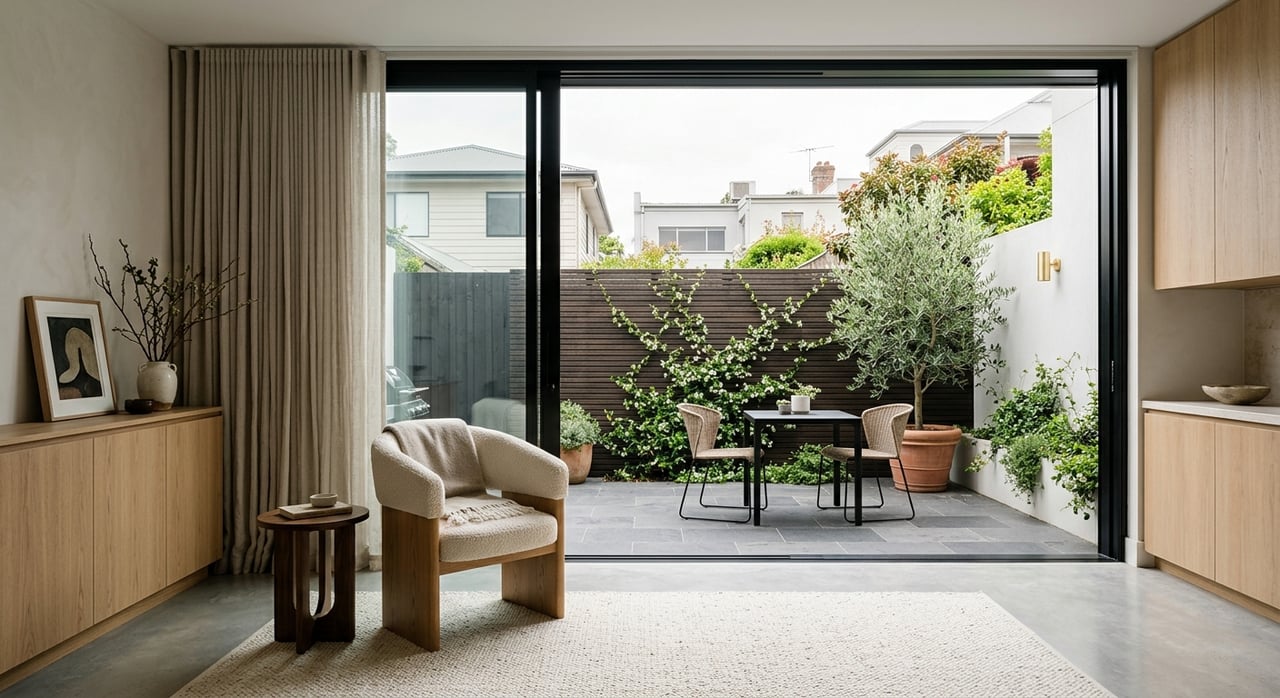
Noe Valley Condo vs House: Which Option Fits You?
June 4, 2026
June 4, 2026
Trying to choose between a condo, TIC, or house in Noe Valley? That decision can shape your budget, your monthly costs, and how much control you have over your home long after closing day. In a neighborhood where walkability is a major draw and prices vary meaningfully by property type, the right fit is not always the biggest place or the lowest list price. This guide breaks down how each option works in Noe Valley so you can make a smarter, more confident decision. Let’s dive in.
Noe Valley is one of San Francisco’s most walkable neighborhoods, with a Walk Score of 94. That matters because many buyers here are not just comparing size and finishes. They are also weighing lifestyle, upkeep, and ownership structure.
Current market data shows how wide the spread can be. Redfin’s March 2026 Noe Valley market page reports a median sale price of $2,275,000 across all home types and an 11-day median time on market. At the same time, its current condo page shows 8 condos for sale at a $1.24 million median list price, while its single-story page shows 4 homes at a $1.65 million median list price.
The big takeaway is simple: in Noe Valley, the type of property you buy can change the budget conversation almost as much as the number of bedrooms. That is why it helps to compare condos, TICs, and houses on both price and day-to-day ownership.
A few active listings help illustrate how these categories can differ in the real world. They also show why buyers should avoid broad assumptions about what is always cheaper or always better.
At 1352 Sanchez Street, a current condo example offers 2 bedrooms, 1 bath, and 1,040 square feet at $1.295 million. That works out to about $1,245 per square foot.
At 440 29th Street, a current TIC example offers 3 bedrooms, 2.5 baths, and 2,185 square feet at $1.995 million, or about $913 per square foot. The listing notes that it is an individual TIC interest in a two-unit building and says it may be a condo-conversion candidate, subject to buyer verification.
Another TIC example at 442 29th Street includes 4 bedrooms, 3 baths, and 1,645 square feet at $1.595 million, or about $970 per square foot. By comparison, a current house at 1840 Castro Street offers 4 bedrooms, 3 baths, and 2,070 square feet at $2.495 million, or about $1,205 per square foot.
These examples suggest that TIC-style flats can sometimes offer more interior space per dollar than some condos or houses. Still, finish level, parking, outdoor space, and building condition remain major price drivers in Noe Valley.
According to the California Department of Real Estate, a condominium is a legal ownership form in a common interest development. You own your individual unit as a separate interest, and you also own an undivided interest in the shared common areas.
When you buy a condo, you automatically become a member of the homeowners association, or HOA. The HOA is responsible for owning, operating, and maintaining the common improvements in the property.
For many buyers, the biggest condo advantage is a lower-maintenance ownership experience. Shared systems and common-area upkeep are handled through the HOA rather than falling entirely on you.
That convenience comes with monthly dues. HOA budgets usually cover day-to-day operations and reserve funding, and special assessments may be charged for major repairs or other extraordinary costs. In practical terms, condos often trade direct maintenance responsibility for dues, shared governance, and some assessment risk.
A condo may be the right choice if you want:
In Noe Valley, condos can make a lot of sense if you value simplicity and want an easier ownership model than a more complex shared-property structure.
A tenancy in common, or TIC, is a form of ownership where a group co-owns a single parcel. San Francisco’s Assessor explains that TICs involve co-ownership of one property, while the California Department of Real Estate describes them as undivided-interest subdivisions with exclusive occupancy rights assigned by agreement.
That agreement is a big part of what makes a TIC different from a condo. It typically sets out which owner occupies which unit, how property taxes are apportioned, and how financing is handled.
TICs can feel more house-like than many condos, especially in older Noe Valley buildings with traditional floor plans and period details. But the legal structure is usually more document-heavy than a standard condo purchase.
The DRE notes that no co-owner may unilaterally use, mortgage, or transfer the common property. San Francisco’s Assessor also notes that TIC shares are treated as one parcel for billing, with reassessment applied to the portion sold when a percentage share changes hands.
A TIC-style flat may be the right choice if you want:
In Noe Valley, that can be appealing if your top priority is space and character. Just be prepared for more paperwork and a resale path that may not feel as straightforward as a condo.
A single-family home generally gives you the most direct control. The California Department of Real Estate distinguishes standard subdivisions as properties where the owner has exclusive ownership of a particular lot or parcel and no common ownership rights with neighbors.
That means you are not sharing governance of common areas with an HOA or co-owners in the same way you would with a condo or TIC. For many buyers, that control is the biggest advantage.
The tradeoff is responsibility. DRE homebuyer guidance reminds buyers to budget for maintenance and unexpected repairs, and with a house, those costs typically fall fully on the owner.
In practical terms, a Noe Valley house often offers the strongest long-term flexibility, but it also usually comes with a higher purchase price and the full burden of upkeep. If the roof, foundation, drainage, or exterior needs work, there is no shared association budget to absorb it.
A single-family home may be the right choice if you want:
If autonomy matters most to you, a house will often be the cleanest fit.
Here is the simplest way to think about the tradeoffs in Noe Valley:
| Property type | Best for | Main tradeoff |
|---|---|---|
| Condo | Lower-maintenance ownership and clearer shared structure | HOA dues and possible assessments |
| TIC-style flat | More space or character per dollar | More complex documents, financing, and resale |
| Single-family home | Privacy, land control, and long-term flexibility | Higher cost and full maintenance responsibility |
This is not a strict rulebook. It is a practical framework based on how these ownership structures usually function in California and San Francisco.
If you are deciding between a condo, TIC, or house, start with how you want to live rather than just what you want to spend. In Noe Valley, that usually leads to a better answer.
Ask yourself these questions:
Your answers will usually point you in the right direction. Buyers who want a low-maintenance routine often lean condo. Buyers who want more room and period character may look closely at TICs. Buyers who want privacy and full control often aim for a house.
In Noe Valley, some TIC listings are marketed with possible condo conversion potential. That can sound appealing, but it should be treated carefully.
One current listing in the neighborhood is explicitly described as a condo-conversion candidate subject to buyer verification. San Francisco’s Condo Conversion Below Market Rate program also shows that condo-conversion-related units can be governed by separate city rules, including lottery and primary-residence requirements for participating below-market-rate homes.
The practical lesson is that possible condo conversion is not the same as guaranteed future flexibility. If that issue matters to you, it deserves careful review during your due diligence.
In Noe Valley, choosing between a condo, TIC, or house is really about matching the property type to your lifestyle, budget, and tolerance for complexity. A condo can offer convenience and a more standardized structure. A TIC can offer more space or character for the money, but with a more complex ownership path. A house usually gives you the most control, along with the most responsibility.
Because Noe Valley is both highly walkable and highly competitive, those tradeoffs matter. Looking only at price can miss the bigger picture of how the home will actually feel to own over time.
If you want help weighing the real differences between specific Noe Valley listings, working through ownership structure questions, or comparing what your budget can buy across property types, KJ Kohlmyer can help you evaluate the options with a practical, neighborhood-focused lens.
October 15, 2026
October 8, 2026
October 1, 2026

September 24, 2026
September 17, 2026
September 10, 2026
I am a full-service real estate professional who has been buying, selling, and developing property in San Francisco for over 15 years.