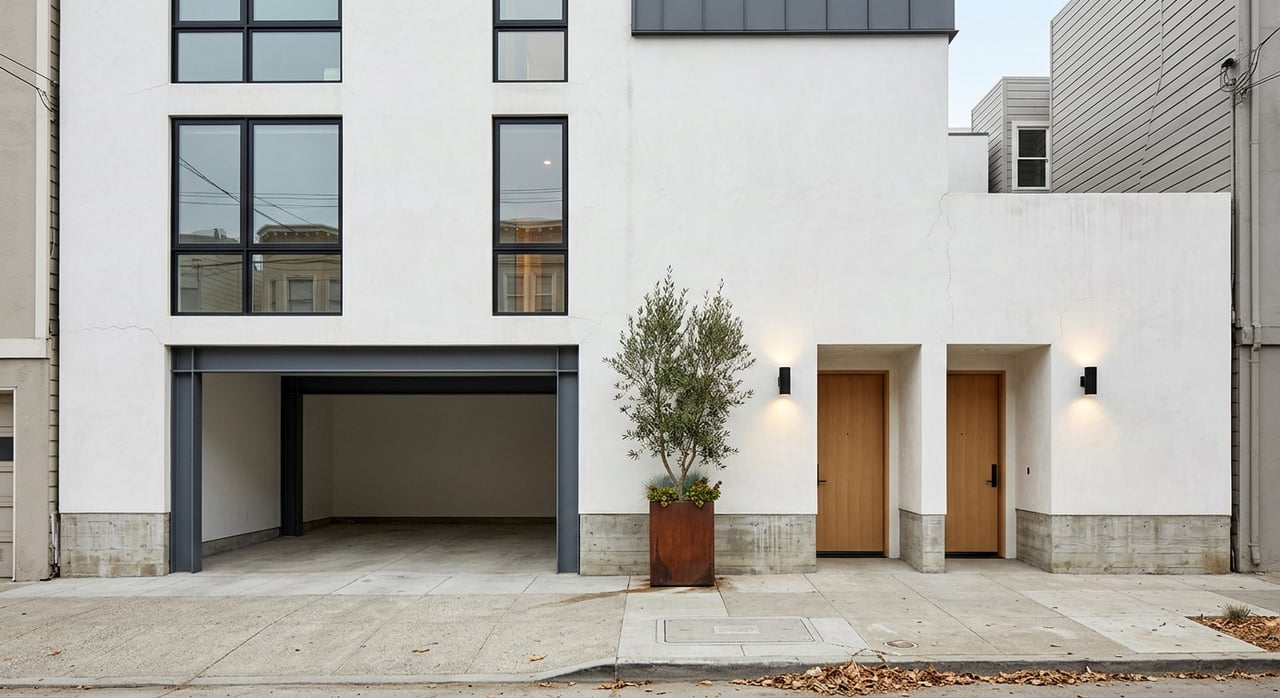
Mission District Small Lot Entitlement Insights for 94110
April 16, 2026
April 16, 2026
Thinking about a small development play in the Mission? This neighborhood can offer real upside, but it is also one of the easiest places in San Francisco to misread if you rely on a quick zoning label or a street-level impression. If you are evaluating a fixer, a small multifamily property, or an underbuilt lot in 94110, understanding the entitlement path early can save you time, money, and costly design revisions. Let’s dive in.
The Mission sits in a unique position within San Francisco’s planning framework. Under the Mission Area Plan, it is treated as a high-opportunity infill area, but one where context still matters. That means major corridors like Mission Street and Valencia Street may support more intensity, while lower-scale residential areas are expected to maintain their existing pattern and scale.
For you, that creates both opportunity and nuance. A parcel that looks underbuilt may have room for additional units or a better use of existing space, but historic resources, street context, and envelope controls can all shape what is actually feasible.
In the Mission, parcel-level due diligence matters more than neighborhood intuition. The area includes a mix of residential zoning, mixed-use zoning, historic resources, and special-use overlays, so two nearby properties can have very different redevelopment potential.
Your best first step is the City’s Property Information Map, or PIM. It can help you confirm zoning, height and bulk limits, special use districts, permit history, historic records, and even enforcement complaints. If a property raises a more interpretive question, SF Planning also points owners and buyers toward a Zoning Verification Letter or a Letter of Determination.
A common mistake is assuming a small residential lot can automatically support multiple units because it is in the Mission. In RH districts, the baseline density rules can be quite tight.
According to SF Planning’s residential district controls summary, RH-1 allows one unit per lot, RH-2 allows two units per lot, and RH-3 allows three units per lot. There may be conditional-use paths to more density based on lot area, but those are not automatic and need to be reviewed carefully.
That matters because many small developers underwrite a project based on hoped-for unit count. In practice, the baseline zoning may be only the starting point, and the real value often comes from identifying a valid exception, ADU path, or retrofit-linked strategy.
Another common trap is reading the mapped height limit as if it describes the actual buildable mass. It usually does not.
SF Planning’s buildable-area guidance for residential districts explains that buildable area is shaped by front setbacks, side yards, rear yards, and height-plane rules, not just the listed height limit. In RH-1 and RH-2, the front of the building is also controlled by a 30-foot front height plane that angles back toward the rear of the lot.
So if you are looking at a 40-foot RH parcel, you should not assume you can fill that entire envelope. On many Mission lots, geometry reduces the usable massing significantly, especially on narrow or irregular sites.
For some small residential projects, the current fourplex rules may open a more practical path than many buyers expect. SF Planning’s fourplex supplemental states that the Planning Code can allow up to four dwelling units per lot, and up to six dwelling units on a corner lot, in all RH districts.
That said, this is not a shortcut that bypasses process. The project still requires the supplemental application and a Project Application, and the site still needs to work within the applicable envelope and other code constraints.
Corner lots deserve special attention here. In a neighborhood where lot width, access, and building form can strongly affect feasibility, a corner parcel may offer a materially different development picture than a mid-block lot.
If your goal is to add value without taking on a full ground-up development, ADUs are still one of the most useful tools in San Francisco. According to DBI’s ADU guidance, ADUs are allowed citywide in residential-use areas, generally allow one ADU on lots with four or fewer existing units, and place no unit limit on lots with five or more units, subject to code and envelope limits.
The ADU path can be especially attractive because eligible projects may receive waivers from rear yard, parking, open space, density, and partial-exposure rules. DBI also notes that simpler cases may be reviewed in 120 days or less, which can make this route more predictable than a larger entitlement play.
For many older Mission properties, this creates a practical add-on strategy. Instead of forcing a speculative unit count increase through a more difficult path, you may be able to improve project economics through a well-placed ADU that aligns with the existing structure and code allowances.
Older buildings in the Mission sometimes present another angle that small developers should not overlook. DBI states that when a building is undergoing mandatory or voluntary seismic retrofit, the city may allow the building to be raised up to 3 feet to create ground-floor ceiling height as part of the unit-addition framework.
This can be especially relevant for older soft-story or retrofit-prone buildings where ground-floor reconfiguration may already be part of the capital plan. DBI also notes that while single-family zones cannot use this retrofit-linked program, a single-family home in RH-2 or RH-3 can use that path.
For the right building, that can shift a project from marginal to viable. It is one reason experienced buyers separate the retrofit, ADU, and core zoning analyses instead of treating them as one simple entitlement question.
In the Mission, historic status can be one of the biggest surprises in the underwriting process. The neighborhood includes important historic and cultural resources, and the Mission Area Plan specifically flags areas such as Article 10 landmarks and the Liberty Hill Historic District.
SF Planning explains that Article 10 landmarks and buildings in Article 10 historic districts require a Certificate of Appropriateness or an Administrative Certificate of Appropriateness. Even if a building is not formally designated, a structure that is more than 50 years old may still require CEQA review.
That does not mean redevelopment is impossible. It does mean timing, design scope, and documentation may be more involved than the initial listing photos suggest.
Even when the code may support housing, review timing and procedure still matter. San Francisco now requires a Planning Approval Letter before DBI filing for most new permit applications that need Planning review.
SF Planning also states that most new construction and alterations of residential buildings in RH and RM districts require a 30-day Section 311 neighborhood notice period. That does not automatically derail a project, but it is an important part of realistic scheduling.
There is also a helpful practical point in current Planning guidance. For housing development projects, staff may suggest design improvements, but they should not require a reduction in unit count based on neighborhood character alone. That does not eliminate review, but it does limit one form of subjective pushback.
If you are evaluating a property for small-scale development in 94110, this is a smart screening order:
This sequence helps you avoid spending money on design before you understand the real constraints. It also gives you a cleaner framework for deciding whether a property is a true value-add opportunity or just looks that way at first glance.
In the Mission, the highest-probability opportunities are often not the most dramatic ones. They are usually the parcels where zoning is clear, historic status is manageable, the building envelope works, and there is a realistic path through an ADU, the four-unit density exception, or a retrofit-linked unit addition.
That is where local experience becomes valuable. Two properties may look similar on paper, but the one with cleaner entitlement conditions often delivers the better risk-adjusted result.
If you are weighing a Mission fixer, small multifamily property, or redevelopment site, working with someone who understands both neighborhood context and project-level feasibility can help you move faster and underwrite more accurately. If you want a practical second look at a site or an opportunity in 94110, connect with KJ Kohlmyer for local, development-informed guidance.
October 15, 2026
October 8, 2026
October 1, 2026
September 24, 2026
September 17, 2026
September 10, 2026
I am a full-service real estate professional who has been buying, selling, and developing property in San Francisco for over 15 years.